How to Choose the Right Commercial Fridge (2026 Guide)
- Lisa Craven
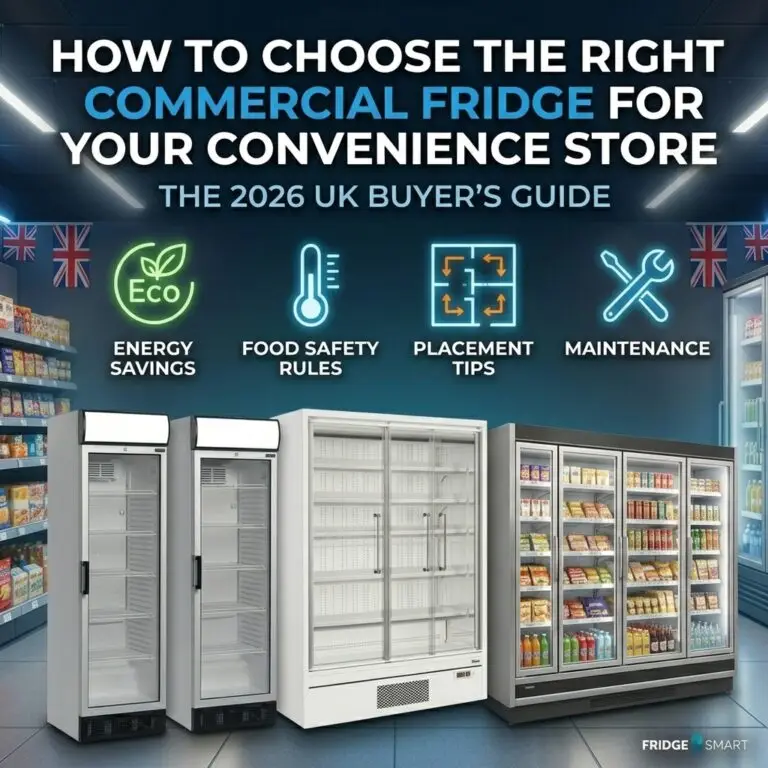
The 2026 UK buyer’s guide — covering fridge types, energy savings, food safety rules, placement tips, and maintenance.
Running a convenience store means your fridges are working 24 hours a day, 365 days a year. They’re your biggest energy cost, your biggest stock protection tool, and the first thing customers notice when they walk in.
Get your refrigeration right and you’ll sell more, spend less on electricity, and breeze through inspections. Get it wrong and you’re looking at spoiled stock, sky-high bills, and a poor hygiene rating on the door.
This guide covers everything a convenience store owner needs to know before buying a commercial display fridge in 2026.
Your Fridge Is Probably Your Biggest Bill
Refrigeration accounts for up to 55% of a typical convenience store’s total electricity bill. That’s more than lighting, heating, and everything else combined.
A single breakdown can cost anywhere from two to five thousand pounds once you add up spoiled stock, emergency callout fees, and the sales you lose while the unit is down.
Types of Display Fridges Explained
Before you start comparing prices, you need to know what’s out there. Here are the main types you’ll see in convenience stores across the UK:
Multideck Chillers (Open Front)
The tall, open-fronted units you see in every supermarket. Customers can grab products without opening a door, which drives impulse purchases. The downside? They use significantly more energy because cold air spills out constantly.
Browse Multidecks
Glass Door Uprights
Upright units with glass doors that keep the cold air sealed inside. More energy efficient than multidecks and still give customers full visibility of what’s inside. Studies show glass door drink displays can increase beverage sales by 35–40% through product visibility alone.
Browse Glass Door Fridges
Countertop Display Fridges
Small units that sit on or near your counter. Perfect for impulse buys at the till — energy drinks, chocolate bars, small snacks.
Browse Countertop Fridges
Serve-Over Counters
Glass-fronted counters where staff serve customers from behind. Common in delis and shops selling fresh sandwiches, pies, or cooked foods.
Bottle Coolers
Purpose-built for chilling drinks fast. Undercounter and upright models available — a must-have for any shop selling cold beverages.
Browse Bottle Coolers
Multideck vs Glass Door: Which Is Right for Your Shop?
This is the biggest decision most convenience store owners face:
- ✔ Excellent impulse purchases — no barrier
- ✔ Uses vertical space well
- ✔ Fast product access for customers
- ✘ Higher energy use — cold air escapes
- ✘ More expensive to run month to month
- ✘ Needs night blinds or doors to save energy
- ✔ Sealed doors retain cold — energy efficient
- ✔ Significantly cheaper to run
- ✔ Full visibility through glass
- ✔ Compact footprint
- ✘ Customers must open doors (slight barrier)
- ✘ Fewer impulse grabs than open units
Choosing the Right Size for Your Space
Small shops (under 500 sq ft)
A single glass door upright and a countertop display near the till will cover most needs. Look for slim-line models designed for tight spaces.
Medium shops (500–1,000 sq ft)
Room for a multideck on the back wall plus one or two glass door uprights.
Larger stores (1,000+ sq ft)
Full flexibility. Multiple multidecks, glass door banks, a serve-over counter if you do deli, and countertop displays at the till.
- Allow at least 60cm clearance behind any fridge for ventilation and servicing
- Check door swing space — will it block an aisle when open?
- Measure your doorways too — can the unit actually get into the shop?
Energy Efficiency: How to Cut Your Running Costs
With refrigeration eating up over half your electricity bill, even small efficiency gains add up fast.
Check the Energy Rating
UK commercial fridges are rated on an A to G scale. An A-rated unit costs significantly less to run over its lifetime. The cheapest fridge on the shelf is rarely the cheapest to own.
Doors Beat Open Fronts
Adding doors to open multidecks is the single biggest energy saving you can make. A case study from a Scottish convenience store showed annual savings of nearly £1,800 after upgrading refrigeration and adding doors.
LED Lighting
Modern commercial display fridges use LED lighting. LEDs use a fraction of the energy of older fluorescent tubes and produce less heat, so the compressor doesn’t work as hard.
Night Blinds
If you run open multidecks and aren’t ready to fit doors, night blinds are a good halfway step. Pull them down when the shop is closed to cut overnight waste.
EC Fan Motors
Newer units use electronically commutated (EC) fan motors instead of older shaded-pole motors. EC motors use up to 70% less electricity. Make sure any new unit has them fitted.
UK Food Safety Rules You Need to Know
The “danger zone” where bacteria multiply rapidly is between 8°C and 63°C. Keep your stock out of that range.
Temperature Logging
Record your fridge temperatures at least once a day. Twice daily is recommended and looks better during an inspection. Keep your log sheets filed and accessible — inspectors will ask to see them.
EHO Inspections
Environmental Health Officers can turn up unannounced. They’ll check:
- Temperature logs are up to date
- Raw and ready-to-eat foods stored separately
- Use-by dates managed properly
- Equipment is clean and in good condition
Your results feed into the Food Hygiene Rating Scheme — the 0 to 5 score on your front door. A poor score puts customers off. A good score builds trust.
Where to Position Your Fridges for Maximum Sales
Rear Wall: Your Destination Fridge
Put your main multideck against the rear wall. Milk, bread, and everyday essentials go here. Customers walk through the entire shop to reach them, passing other products along the way.
Entrance Area: Impulse and Grab-and-Go
A small display fridge near the entrance catches people in a hurry. Sandwiches, drinks, and snacks within arm’s reach of the door.
Till Area: Last-Minute Add-Ons
A countertop chiller by the till is prime real estate. Energy drinks, small bottles of juice, and chilled snacks all do well here.
Drinks Wall: Side Aisle
A bank of glass door uprights along a side wall creates a drinks destination. Line them up for visual impact and keep them well-lit.
How to Keep Your Fridge Running for Years
A well-maintained commercial fridge should last 10 to 15 years. Neglect it and you could be replacing it in half that time.
Clean the Condenser Coils (Every 3–6 Months)
Dust and grease build up on the condenser coils and force the compressor to work harder. Clean them with a brush or vacuum every three to six months.
Check Door Seals Regularly
Damaged seals let cold air escape and warm air in. This can triple energy consumption. Replace seals as soon as they show wear — it’s a cheap fix that pays for itself fast.
Don’t Overstock
Cramming a fridge blocks airflow and stops even cooling. Leave space between products and never block the air vents.
Defrost When Needed
Ice build-up on evaporator coils reduces efficiency. Most modern units auto-defrost, but schedule manual defrosting if yours doesn’t.
Book an Annual Service
A qualified engineer will check refrigerant levels, electrical connections, thermostat calibration, and drainage. Small cost, prevents big bills.
When to Repair vs Replace
Every fridge has a shelf life. Here’s when to stop repairing and start replacing:
- The unit is over 10 years old and breaking down regularly
- A single repair costs more than 50% of a new unit
- An old compressor is pushing your energy bills up
- You’re constantly adjusting it to maintain safe temperatures
- Door seals, shelving, or structure are beyond simple fixes
Why Convenience Store Owners Choose FridgeSmart
Wide range • Competitive prices • UK-based support • Next-day delivery available
Whether you’re fitting out a new shop or replacing a tired old unit, we’ll help you find the right fridge at the right price.
Browse Our Full RangeFrequently Asked Questions
Looking for help choosing the right fridge for your shop? Get in touch with the FridgeSmart team — we’re happy to help.